Tuesday, May 21, 2013

Light and Optics

Convex Mirrors

Convex:
A convex mirror is a mirror that comes out towards the source of light, like depicted in the diagram. Convex mirrors have many uses, such as the passenger side mirror of a car. In a convex mirror problem, the image created by the light passing through the mirror is always upright, smaller, and virtual.
This diagram shows how the incident ray hits the mirror at an angle that reflects off upwards. The reflected ray reflects off, but the image is still created behind the mirror, which is why the image is virtual. The actual light rays never touch each other. 


This picture of a passenger side mirror of a car shows how the convex mirror makes images appear closer than they actually are. The mirror allows the driver to see more of his surroundings, but produces a virtual image, skewing the actual placement of the car. 


Tuning Fork and Palm Pipe Lab

Tuning Fork and Palm Pipe Lab
     Sound was the main topic of discussion in class this week. Although I wasn't here for the first half of the lab, the second half of the lab consisted of measuring the length of a palm pipe, measuring the diameter of the pipe, and finally solving the wavelength of the palm pipe. The palm pipe I got was .058m, so the wavelength was .247m. After plugging my numbers into the equation velocity=frequency times wavelength, I was able to solve the frequency, which was 1388.66hz.
My Palm pipe, number 15, note F6.

All of my group's palm pipes together. 

To end the lab, the whole class played their palm pipes to the tune of "Twinkle Twinkle Little Star" with their respective notes.

Lemon Battery Lab

Lemon Battery Lab
In class, we made our own batteries consisting of lemons, pennies, and nails.

Real World Connection:
On the website http://www.apple.com/batteries/, it talks about how the iPad battery works.
iPad batteries are: made of lithium ion, light but give a long life, and not required to be charged fully.
On the graph on the website, the term voltage was something I noticed quickly. In class, we learned that voltage is the electric field surrounding a charged object.  

Projectile Motion

Projectile Motion Lab:
     A projectile is an object with only the force of gravity acting upon it. After going down to the gym and recording the path of a basketball being shot, we tracked the flight on the Video Physics app.


 In this graph, we can derive that the slope of the basketball is constant while the distance over time steadily increases.


In this graph, we can see that the basketball moved in a parabolic shape. The peak of the graph is the moment in which the basketball was as complete rest.


Thursday, March 21, 2013

Magnetism


Magnetism:
How can objects like the earth and metals be permanent or temporary magnets?

Objects like the earth and metals can be permanent or temporary magnets depending on their domains. A magnetic domain is a part of a material that determines its magnetism. One example of an item with no domains would be a piece of paper. A piece of paper has no domains, and therefore it can never be magnetic. An object that has domains, but those domains are not lined up would be a paper clip. The paper clip's domains are not lined up until a magnet comes along and aligns its domains, making it magnetic. And finally, an object with domains that are always lined up would be the earth. The moving metals inside of the earth create a magnetic field, and charges on the outer core moving like a solenoid create a huge, permament magnetic field.


Monday, February 11, 2013

iPad Batteries

iPad Batteries

Real World Connection:

The battery used in Apple's iPad is an internal rechargeable lithium-ion polymer (LiPo) battery. This battery is very popular and is found in many laptops and other technology because of its size, power, and lifespan. 

This Apple website talks about the use of LiPo's in iPads. 

A typical iPad battery.

The LiPo contains a temperature gague, which tells when the battery is either above or below safe temperature. LiPo batteries givethe best battery life possible with the lowest total weight. They are rechargeable whenever, and they do not require a full charge. LiPo's can be charged many times, as stated in the article. An LiPo produces 3.7 volts per cell, while a AA battery only produces 1.5 volts. The more volts, the more electric potential energy, the more item use!

When a lithium-ion battery like this one is charged, the voltage increases, creating a mountain of positive charge. The electrolytes then move to the negative electrode. When the charge is unplugged, the electrolytes return to the positive electrode.

Monday, January 14, 2013

Forces in 2D and Circular Motion

Big Questions:
What does it mean to analyze forces in 2D?
  • Forces analyzed in 2D have a length and a width
  • 2D forces have an x as well as a y axis
How do forces cause objects to move in a circle?
  • The center pointing (centripetal) forces make objects move in a circle. 
  • When an object is moving in a circle, it is accelerating. The object is acceleration because acceleration = a change in velocity over a change in time. Velocity is a vector, and therefore changes. If velocity changes, the object accelerates.
This represents the equation for acceleration. 


  • What does it mean to be in orbit? 
    • When an object travels around another object as a result of the centripetal force. 
  • How do satellites orbit planets? 
    • Very similar to the way a plant is able to orbit the sun, satellites are able to orbit a planet. The speed of the satellite is adjusted when it orbits the planet so that it falls to earth at the same rate that the curve of the earth falls away from the satellite. 
    • According to Newton's 1st law, there is an equal and opposite force for each force. The Earth pulls on the satellite and the satellite pulls on the Earth. Since there is no air resistance, the satellite continues falling into orbit around the earth.
  • How do planets orbit the sun?
    • The earth is able to rotate in orbit around the sun due the sun's centripetal force. However, even though the speed is constant, the direction is not. As a result the planets accelerate around the sun. The gravity of the sun acts as on the planets as the centripetal force that keeps them in orbit. Even though the planets and the sun's gravity both pull on each other, the planets orbit around the sun because it has more mass. The planets then fall around the sun because they are both curved. 

Thursday, December 13, 2012

Newton's Three Laws

                                      Newton's Three Laws
Everyone knows the famous scientist Newton's interaction with an apple, but do we know what it means?

Law one
Every object in a state of uniform motion tends to remain in that state of motion unless an external force is applied to it.
Law two

The relationship between an object's mass (m), its acceleration (a), and the applied force F is F = ma. Acceleration and force are vectors which means the direction of the force vector is the same as the direction of the acceleration vector.
Law three

For every action there is an equal and opposite reaction.
Hover Disc Lab Big question: What gives rise to a change in motion? 

When the hover disc was on, there was little friction between the ground and the disc because of the air being produced by the disc. When the disc was off, it was full of friction because it was in direct contact with the ground. A change in motion is affected by different types of forces, such as friction and gravity.

Real World Connection: Air hockey tables
When we get rid of the friction of the table, the puck can be pushed once and will stay in motion until it hits the side of the table or the opponent's "stick". Just as the first law states, an object at motion will stay in motion until acted upon by another force.


Fan Cart lab: 

BIG QUESTION: 
What is the relationship between mass force and acceleration? 


We first turned on the fan cart and pushed it towards the aluminum ring until it collided. We added different masses to the cart and recorded our data.


photo.JPG


Real World Connection: Racing
If a heavy car were to race against a thrown baseball, the car would obviously lose the race, but do we know why? Since the equation for acceleration is F=ma, if we increase the mass, the acceleration will decrease, and if we decrease the mass, the acceleration will increase! This picture is a visual for what I explained.


Fan Cart lab and Hover Disc lab:

In Newton's third law, every action has an equal and opposite reaction, the forces that are the opposites need to be:
  • Equal in magnitude
  • Opposite in direction
  • The same net force

Real World Connection: Baseball
When a baseball is hit by a batter, such as Hunter Pence of the Giants, the ball collides with the bat and is sent flying through the air. The forces interacting in this collision are equal because the force of the bat hitting the ball is equal to the force as the ball hitting the bat. Also, they are going in opposite directions, as you can see in the picture. If a person hits a baseball with a bat with 30N of force (I chose 30 arbitrarily) 30N of force is applied to BOTH the bat and ball, but in opposite vector directions.


Monday, December 10, 2012

Impulse Lab

Impulse: A change in momentum 
                      J=P(after)-P(before)
Big Question: 
What is the relationship between impulse, force, and time during a collision?

For this lab, we used a cart and performed a collision. First we attached our force probe to the LoggerPro and attached one sonic range finder to the LoggerPro. We then zeroed out the force probe and collected our data. We measured the force during the collision and also used the sonic range finders to record the velocity of the carts.  We found the momentum for before and after the collision, as well as finding the velocities. Using these things, we were able to find the impulse of the cart. 
Our whiteboard from after the lab displaying our graphs and the equations we derived.
 The impulse value is very similar to the value of the area underneath our graph. We were able to say that J=FT. This video explains the concept very well.
Real world connection:
In baseball, one of the most important parts of a hitter's swing is the follow through. High speed cameras have shown that the follow through of a hitter's swing increases the time in which the collision occurs. By increasing the time, the change in velocity is also increased due to the equation J=FT


Thursday, December 6, 2012

Collisions Lab


BIG Questions:

What is the difference between the amount of energy lost in an Elastic Collision v. Inelastic Collision?
What is a better conserved quantity-- momentum or energy?


Pre-Lab:
  • scalar - simply values, no direction involved
  • vector - magnitude and direction
  • Moving to the right or upwards - positive
  • Moving to the left or downwards- negative
Types of Collisions:
Elastic
Inelastic 

Explosion


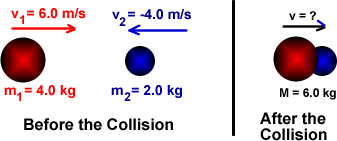
Using two carts, two rangefinders, and a track, my group was able to record some data. We did two different experiments, inelastic and elastic. For the inelastic collision, we pushed the two carts together and they stuck together because of the velcro. For the elastic collision, we pushed the red car with the spring in front and the blue cart with the spring and front together. With this data, we were able to determine that momentum is better conserved than energy because there is a plethora of factors that energy can be lost to.
We found the percent differences in the energy and momentum to determine that momentum is best conserved. We also derived the equation, P=MV where P is momentum, M is mass, and V is velocity.


Real World Connection: 
On 9/14/11, the 39 year old catcher for the Boston Red Sox, Jason Varitek, had one of the most memorable collisions in baseball history. When the runner, Brett Lowrie collided with Varitek, the two players created an elastic collision. This sports science video explains the collision very well.

Wednesday, December 5, 2012

Rubber Band Cart Launcher

This week in class, we completed the Rubber Band Cart Launcher Lab.

BIG Question: How are energy and velocity related?


Our group's data from this lab.
We were required to build a cart launcher consisting of: a rubber band, a cart, a track, and the air glider system. After pulling the rubber band 1cm, 2cm, 3cm, 4cm, and 5cm. We used  the photogate sensor, and we were able to calculate the velocity in which the cart was traveling. 


Using the data we acquired from the sensor, we created a graph on our iPads using the Vernier Graphical Analysis app. From this graph, we were able to derive the equation: E=1/2(mv^2). To answer the big question, energy and velocity are related in the way that if velocity lowers, so will the energy. 


Also, we learned about kinetic energy (moving) and elastic potential (stored). This video has a really catchy song about kinetic and potential energy!


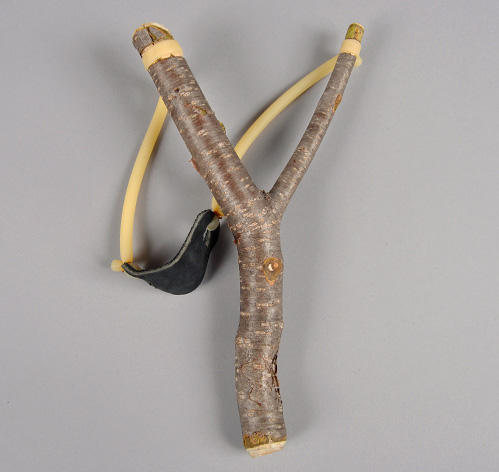
When I was younger, I used sling shots all the time for a variety of reasons. When a rock is put in the holder and pulled back, work is being done and potential energy is stored. When the holder is released, all of the potential energy is converted into kinetic energy and the rock goes soaring. 

Monday, December 3, 2012

Pyramid Lab

Pyramid Lab

This week in class, we performed an experiment about pyramids and how ramps were used to create them. I really found it amazing how the pyramids were created in times with little to no technology.

Big Question: Is the product of force and distance universally conserved?
Answer: Yes, because the law of conservation of energy.

Before we started the lab, we watched this video to find out more about how ramps were used in ancient Egyptian times. 
We may not notice them, but ramps are all around us in our daily lives.
In the lab, we made 3 different ramps that all had an end height of 11 cm. We were required to figure out the amount of work. We first started off by pulling the car 9cm, (which was the height of the books) and this took 2.5 Newtons. Next we dragged the car on the track 140cm which took .15 Newtons. For our last test, we dragged the car 100cm which took .2 Newtons. We came to a conclusion that the greater the distance, the less force required to pull the car.  Using the formula W=FD, we were able to to answer the big question with, yes, energy is conserved.
Being a skier, I use ramps to jump onto a box, shown in the picture above. The ramp makes it easier for me to get on the box and complete my trick. 

Monday, September 24, 2012

Rubber Band Lab

Rubber Band Lab
In this week's lab, we had to answer two big questions: 
"How can we store energy to do work for us later?"
“How does the force it takes to stretch a rubber band depend on the 
AMOUNT by which you stretch it?” 

To answer these questions, we had to follow some steps.
1. Plug in the force probe, hold it horizontally, and zero it.
2. Then, hook the force probe over both strands of the single looped rubber band. 
3. After pulling the rubber band 1cm (.1m) for 10 seconds, measure the average amount of force.
4. After finishing these steps, repeat them but use the lengths of 2cm, 3cm, 4cm, and 5cm.

We recorded the following data:
  • Length | Force (single looped rubber band)
  • .1m      |  .7n 
  • .2m      |  1.4n
  • .3m      |  2n
  • .4m      |  2.8n
  • .5m      |  3.4n
  • Length | Force (double looped rubber band)
  • .1m      | 4.2n
  • .2m      | 5.7n
  • .3m      | 7.3n
  • .4m      | 9.9n
  • .5m      | 12.8n
In this lab I learned about:
  • Hooke's Law
  • Multiple different equations


Real World Connection:
"I shot an arrow into the air,
It fell to earth I knew not where." - 
Henry Wadsworth Longfellow
Bows must be made of elastic material. When the bow is drawn back, energy is stored. The farther back the bow is drawn, more energy is stored in the bow. After the bow is released, all the energy stored in the bow is transferred to the arrow, and away it goes.  

Wednesday, September 5, 2012

Simple Machines: Pulley Lab

Simple Machines: Pulley Lab!

In this lab, the main questions we had to answer were these:
“How can force be manipulated using a simple machine?" 

"What pattern do you observe regarding the relationship between force and distance 
in a simple machine? "

To answer these questions, we followed these steps:
  1. We designed a pulley system!
  2. After many attempts, the pulley system was finally able to hold the 200g brass mass, which meant the next step was to put the 100g brass mass on the other side and start lifting!
  3. After lifting the 200g brass mass to 10 cm, we measured the length of string it took to lift it up.
After lifting the 200g brass mass with 1.8n, we were challenged to use the same pulley but find a way to pull the mass with only .5n! To accomplish this, we lifted the mass in many different ways, but we were finally able to accomplish this by pulling diagonally to the right. Although it took roughly 3cm more string, the task was accomplished. From our lab, we were able to come up with the equation: W=FD. Work(energy) equals force(newtons) times distance(centimeters) 


Real World Connection:
     Speaking of simple machines, every time I ride my longboard, I'm using a simple machine commonly known as the wheel and axle! The wheel and axle have made it super easy for people to move things and it has been the basis for tons of creations!

Monday, September 3, 2012

Mass-Force Lab

Mass-Force Lab!

In this week's mass-force lab, we had to answer two main questions: 
“How do we measure force in a reliable and repeatable way?"

"What is the relationship between the mass of an object and the force needed to hold it in place?” 

To answer these questions, each table group had to follow a set of steps:
  •  First, we had to hang a brass mass from a manual force probe, and then write down the mass of the brass (in g and kg) and how much force it took to support that mass at rest.
  • After doing that for 3 or 4 masses, we plotted the information on a graph with the mass on the x-axis and the force on the y-axis.
  • Finally, after the graph was finished, we created a best-fit line that goes through the most points on the graph. 


Real World Connection:
  • Now that I have to think about force and mass, it is easy to connect it to my daily life. Every single time I swing a baseball bat, I am exerting force on the ball, which here would be the mass. The more force that I exert on the tiny baseball, the farther it is going to fly.